
Designing your Case for Support

Updated: Apr 14, 2025
An important element when designing the successful Project, Endowment or Capital Campaign (typically in the $1M to $300M range), is the CASE for SUPPORT.
In fact, the Clemons-Associates team would argue a CASE for SUPPORT is one of the most important documents you will create for your nonprofit. It explains what your nonprofit does, why it’s important and, most importantly, why people should support you.
Your CASE for SUPPORT will serve as the foundation for all fundraising communications including major gift campaign, mid-level giving, planned giving and grant proposals; Also known as a case statement or donor prospectus, this document explains to potential donors why they should donate money to an organization. The CASE for SUPPORT should be written with donors in mind and answer key questions they may have about the organization's fundraising initiative. It can also serve as a roadmap for development teams and fundraisers.
6 Key Steps in Designing your CASE for SUPPORT
Let’s walk through our recommended steps for creating this important element:
1. Define your purpose and audience.
Start by getting specific—why are you writing this case for support, and who are you
appealing to? This will allow you to develop a targeted message that will compliment your campaign, elevate your solicitation and enhance your pitch deck/grant submission.

If you’re preparing to solicit a gift from a major prospect, you can tailor your message to them specifically. For example, a humanitarian organization raising funds for clean-water drilling projects might focus on how clean water impacts lives in third-world countries. This tailored CASE for SUPPORT might reference the life-changing impact villagers receive and explain how a donor's gift expands and amplifies services.
2. Recruit a team with varied perspectives.
Creating a case for support is a task that shouldn’t be tackled alone. A larger team of internal stakeholders will provide input from a variety of perspectives, ensure your messaging is in line with organizational standards, and generate more internal buy-in for your campaign. This team might include:
Community Leaders; Board Members; Advisors
Internal Leaders; Staff
Development Staff (who’ll be having conversations with donors)
Volunteers who’ve seen your work firsthand and know how to represent your organization to the public

It’s also a good idea to seek input from external stakeholders once you have an initial draft of your case for support. Depending on the case’s purpose, consider insights/inputs from end-user constituents, media, current and prospective donors, and current and prospective sponsors or funders.
3. Write your nonprofit’s story.
Your CASE for SUPPORT should tell a story. Clear narratives are often the most effective way to engage readers and elicit emotion. Who’s the character who needs your nonprofit’s help? What is your organization up against while trying to achieve its mission? What role do your donors play in driving the story and reaching a resolution?
Start by outlining the key points and most important elements of your campaign. Look at how they fit together and how they can be described and expanded upon to make the best possible pitch for what you’re trying to accomplish. From here, work with your team to draft a complete narrative that ties it all together. Collect feedback, produce a revised version, and repeat until you have a draft that effectively communicates these essentials:
Your vision – Where is your nonprofit headed? What’s your campaign roadmap?
Your priorities – What exactly are you working to achieve with this campaign?
Your impact – What impact will your successful campaign have, and what impact data (outputs) shows you’re an effective difference-maker?
Your voice – What’s your nonprofit’s identity? How can you express your values in a meaningful, authentic way?
Remember, brevity and clarity are essential for an effective case for support, no matter its specific purpose. Avoid jargon or unnecessarily vague words, and write with your audience in mind, whether they’re an individual prospect or a donor persona.
4. Gather supporting material.
Of course, a compelling story alone isn’t always enough to motivate giving or communicate everything a donor might want to know before they commit. Hard numbers and real details are important for filling in all the blanks and showing donors that yours is a responsible organization ready to put their gifts into action. Pull these supporting details from:
Your Annual Report (or Donor Report)
Your nonprofit’s strategic plan
Specific program or project plans
Budgets, financial projections, and spending plans
Impact stories, use cases and testimonials
Statistics about the problem you’re addressing
Statistics about your nonprofit’s past impact
Take time to gather visual materials as well, including photos and brand collateral that can be used in the finished product. The combination of a compelling story, evocative details, and rich visuals will create a well-rounded and effective CASE for SUPPORT.
5. Consider all applications.
The CASE for SUPPORT will be distilled in both printed and digital forms. Your collateral mix may include:
Website(s); Microsite
Blogs; e-Newsletters
Brochures and Folders
Printed one-pagers that lay out the most compelling details for easy reference during conversations (info graphic)
PDF files for easy sharing via email
6. Compile the complete CASE for SUPPORT.
Now’s the time to bring it all together into a polished end product. As mentioned above, your CASE for SUPPORT will serve as the foundation for fundraising communications. Whether conveyed in digital or print form, this important element will be incorporated into awareness, education, inspiration and solicitation with regard to the following fundraising activities:
One-on-One Solicitations
One-on-Many Solicitations
House Parties
Town Halls; Summits; Launch Parties
Ground Breaking event; Open House events
Association Presentations (e.g., Rotary Club, Chamber of Commerce)
Clemons-Associates works closely with each client on developing the CASE for SUPPORT and involves copy writers, graphic designers and strategists. See example of an excellent CASE for SUPPORT for a client based out of Kansas City:

Download sample of full CASE for SUPPORT:
Bottom line: Any nonprofit can secure more gifts and deepen its connections to donors through the power of effective communication. By developing, refining, and tailoring a robust CASE for SUPPORT, you’ll give your team a powerful tool for expressing your mission and showing donors the impact they’ll have on driving it forward.
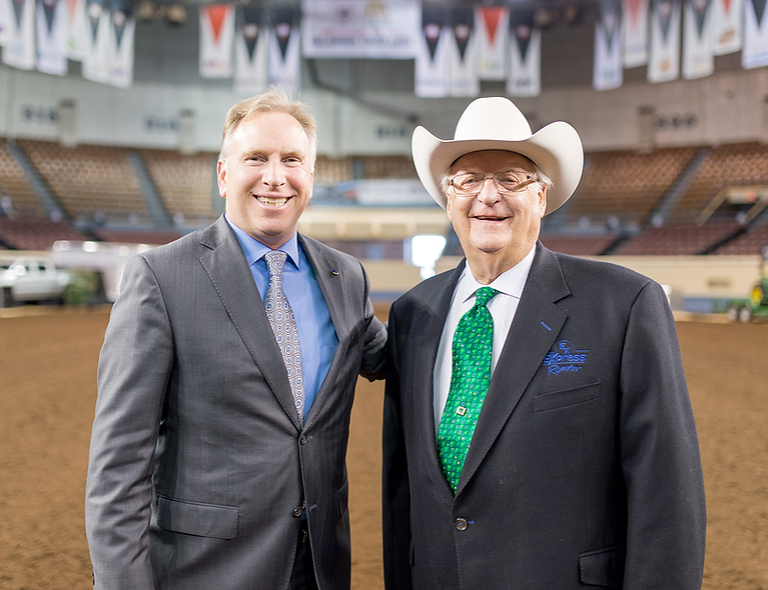
Craig Clemons with Friend, Philanthropist and President/Founder/Board Chairman of Express Employment Professionals, Bob Funk, Sr.
Seeking expert assistance from seasoned professionals?
Contact Craig Clemons at craig@clemons-associates.com or one of our rock star associates for more details. Clemons & Associates is on standby to help you with brand identity, strategic messaging, campaigns, digital assets and programs/projects.


